

Opening a container to find a “glass puzzle” instead of the products you ordered is a purchasing manager’s nightmare. For high-volume buyers, the product price is only half the story; the true value lies in the after-sales security that protects your retail margins when things go wrong.
A comprehensive after-sales commitment from glassware manufacturers China should include a 1-year warranty against manufacturing defects such as seal failure, clouding, or bubbles, and a clear policy for transit breakage exceeding 3%. In 2026, leading suppliers like PYGLASS provide “Zero-Worry” replacement SLAs and credit-back systems for defective items identified during warehouse destuffing. Ensuring your contract defines acceptable AQL standards, evidence requirements for claims, and specific lead times for replacement shipments is critical for maintaining supply chain resilience and protecting your brand reputation in global retail markets.

At our 200,000㎡ manufacturing base in Zibo, we have learned that the relationship with a buyer like Jacky doesn’t end when the container leaves the port—it’s just beginning. In the glass industry, quality issues can sometimes take weeks to appear, especially after the stresses of ocean transit. Building a robust after-sales framework 1{#ref-1} is not just about getting a refund; it is about ensuring your business never stops moving. This guide breaks down the essential warranty protections you must demand in 2026.
What is the standard acceptable breakage rate for glass shipments?
In our 15 years of production, we have never met a buyer who likes seeing broken glass. However, the physical reality of shipping fragile borosilicate across 10,000 miles means that a 0% breakage rate is almost impossible to guarantee without exorbitant packaging costs.
The industry-standard acceptable breakage rate for international glassware shipments is typically 2% to 3%. Reputable glassware manufacturers China will usually include this ‘allowance’ in their pricing, but any damage exceeding this threshold should be fully covered by the supplier through credits or replacements. For glass containers wholesale orders, it is vital to distinguish between ‘Sea-side’ damage caused by rough transit and ‘Factory-side’ flaws like poor annealing, which creates internal stress and makes the glass prone to spontaneous shattering upon arrival.
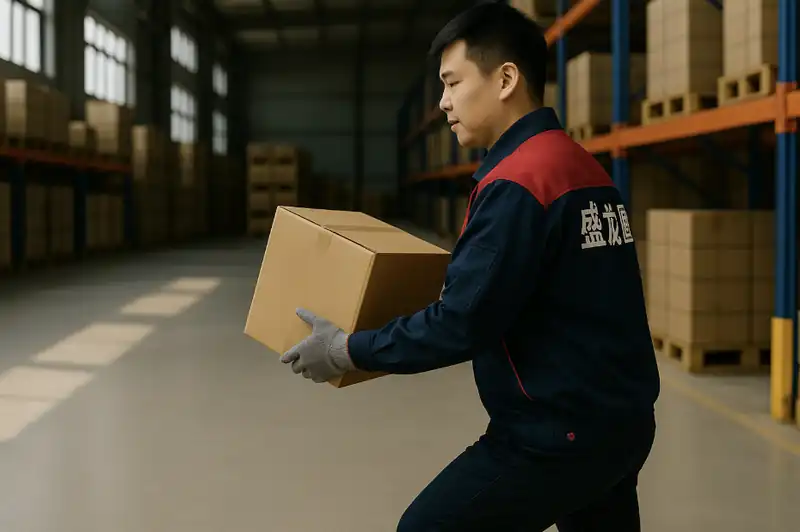
Defining the Threshold of Acceptability
When we negotiate contracts with our global partners, the first thing we define is the “Net Usable Quantity.” If you order 10,000 units of recipientes de vidro borossilicato 2{#ref-2}, you expect 10,000 units to reach your retail shelves. In our factory, we use 5-ply corrugated cartons and palletization techniques designed to keep breakage below 1%.
We tell our clients that anything under 2% is considered “normal wear and tear.” However, if Jacky opens a container and finds 10% breakage, that points to a systemic failure. It could be that the pallet wasn’t wrapped tightly enough or that the factory used lower-grade cardboard to save costs. As a buyer, you must have a clear “Claim Trigger” in your contract.
Our engineers have found that the most dangerous form of breakage isn’t the shards you see in the box—it’s the micro-fractures you don’t see. If the factory rushes the annealing process 3{#ref-3} (the slow cooling of the glass), the material develops internal stress. A container might look perfect at the port but shatter the moment a consumer puts it in a microwave. This is a “latent defect.” Your warranty should explicitly state that “manufacturing defects” include spontaneous breakage occurring within 90 days of arrival.
Industry Benchmark Breakage Rates (2026 Estimates)
| Tipo de produto | Acceptable Range (%) | Primary Cause of Failure | Factory Responsibility |
|---|---|---|---|
| Standard Soda-Lime Jars | 3.0% – 5.0% | Low thermal resistance | Low – High transit risk |
| Borosilicate Bakeware | 1.0% – 2.0% | Heavy weight impact | High – Requires superior packing |
| Thin-Walled Glass Cups | 4.0% – 6.0% | Vibration / Point pressure | Moderate – Fragility is inherent |
| PYGLASS High-Boro 3.3 | < 1.0% | Optimized annealing | Full – Built for durability |
How should I negotiate a refund or replacement policy for defective items?
Negotiating after-sales terms is often uncomfortable because it involves discussing failure. But for a professional brand, this is where you secure your profit. Many manufacturers will try to push for “credit on the next order,” but if the quality is poor, you might not want a next order.
Negotiate a replacement policy by establishing a tiered response system based on the severity of the defect. For critical safety issues, demand an immediate refund or air-freight replacements at the supplier’s expense. For minor cosmetic flaws, a ‘Credit Note’ applied to the current balance is standard. At PYGLASS, we recommend formalizing these ‘Standard Operating Procedures’ (SOPs) within the contract to ensure that glassware manufacturers are held to a predictable timeline for resolution, typically 14 days from the date of the claim.
Moving from “Credit” to “Cash”
In our finance department, we understand that “credit on the next order” is the factory’s way of locking you into a long-term relationship. We suggest a “Hybrid Recovery Model”:
- The First 3 Orders: If there are defects, the supplier should offer a direct refund or a reduction in the final payment. This keeps the factory “sharp” on quality.
- Long-Term Partnership: Once trust is built, a credit system is more efficient for administrative purposes.
You should also negotiate who pays for the disposal of defective goods. If a shipment arrives with quality issues, you can’t sell it. Disposal fees in countries like Canada or the UK are expensive. Your contract should state that if a batch fails AQL 1.5 standards 4{#ref-4}, the factory must cover the cost of certified destruction.
The Power of the “SLA” (Service Level Agreement)
A warranty is only as good as its speed. When talking to glassware manufacturers China, ask for a “Priority Replacement SLA.” This means that in the event of a major failure, the factory agrees to “bump” other orders to put your replacements on the line immediately. At our Zibo base, we reserve 5% of our monthly capacity specifically for “Emergency Quality Support.”
What evidence do I need to provide to claim compensation for poor quality?
The most common reason claims are rejected is “insufficient evidence.” A factory can’t fix a problem they can’t see, and their insurance won’t pay out without proof. You must train your warehouse team to act as “forensic investigators” during the destuffing process.
To claim compensation, you must provide a ‘Digital Evidence Pack’ consisting of high-resolution photos of the container seal before opening, the pallet condition, and clear close-ups of specific defects. For large batches of glass containers wholesale, a third-party AQL inspection report or a ‘Warehouse Receipt Report’ identifying the batch number and date code is required. This data allows our engineers to trace the issue back to a specific furnace run, ensuring the claim is processed without dispute.
The Step-by-Step Evidence Protocol
In our 200,000㎡ facility, every batch is logged with a “Batch Fingerprint.” We advise our buyers to follow this “3-View Rule” for every claim:
- The Context View: A photo of the entire pallet or carton as it sits in the container.
- The Label View: A clear photo of the carton label showing the SKU and Batch Number.
- The Detail View: A macro-photo of the defect. Use a coin or a ruler for scale.
Without these views, a factory can argue the damage happened during your internal movement. In 2026, many shipping lines use ISO 9001 quality systems 5{#ref-5} for digital tracking; having your own video evidence is the best way to counter their claims.
Compensation Evidence Checklist
| Evidence Type | Mandatory For | Por que é importante |
|---|---|---|
| Container Seal Photo | Transit Damage | Proves the container wasn’t opened mid-transit |
| Batch / QC Tags | Manufacturing Defects | Traces the error to a specific machine/shift |
| 10% Sampling Photo | Major Quality Claims | Shows the defect is systemic, not isolated |
| Inspection Report | Full Batch Rejection | Provides independent SGS validation 6{#ref-6} |
How do I ensure the contract includes clear terms for after-sales support?
Vague contracts are the enemy of after-sales support. If your contract only says “Supplier guarantees quality,” you have zero protection. You need to define the what, when, and how of the support process.
Ensure your contract includes an ‘After-Sales Appendix’ that explicitly defines ‘Material Defect’ and ‘Acceptable Quality Level’. When sourcing glass food storage containers wholesale, you should require clauses for ‘Spontaneous Breakage’ protection and ‘Consequential Damage’—ensuring the factory covers the cost of labor for re-inspection. Finally, include a ‘Dispute Resolution’ clause that specifies a 30-day window for claim settlement, preventing manufacturers from dragging out negotiations.
Defining “Material Defect” in 2026
In 2026, sustainability and safety are technical specs. If you are buying recipientes de vidro para armazenamento de alimentos no atacado, your contract should define a defect as a failure to meet FDA food contact standards 7{#ref-7} or the ESG criteria 8{#ref-8} you paid for. If a batch fails these tests, that is a material breach.
You should also require the factory to meet ASTM glass standards 9{#ref-9} for mechanical strength. By putting these numbers in the contract, you remove subjectivity.
Essential After-Sales Clauses for Glassware
| Clause Name | What It Should State | Why It Protects You |
|---|---|---|
| Latent Defect Clause | Coverage for 90 days post-arrival | Protects against poor annealing issues |
| Spontaneous Breakage | Liability for inclusions | Safety protection for tempered glass |
| Inspection Fees | Factory pays if defect rate > AQL | Incentivizes factory-level QC |
| Recycling Commitment | Factory funds local recycling of rejects | Supports Extended Producer Responsibility 10{#ref-10} |
Conclusão
A world-class after-sales commitment is the invisible insurance policy that every glassware brand needs. By defining acceptable breakage rates, negotiating tiered replacement policies, and anchoring everything in a detailed contract, you transform your supply chain from a risk into a competitive advantage. At PYGLASS, our 200,000㎡ facility is dedicated to more than just making glass; we are dedicated to your long-term success.
Would you like me to provide a sample “After-Sales Service Level Agreement (SLA)” template that you can attach to your next purchase order for glass containers wholesale?
Notas de rodapé
1. Research on global supply chain resilience in a post-pandemic era. ↩︎
2. Technical properties and industrial benefits of borosilicate glass. ↩︎
3. Scientific explanation of the glass annealing and cooling process. ↩︎
4. Guide to understanding AQL sampling and industrial inspection levels. ↩︎
5. Official international standards for quality management and documentation. ↩︎
6. Global leader in third-party inspection, testing, and certification services. ↩︎
7. FDA regulatory information for food contact materials and containers. ↩︎
8. Framework for evaluating environmental, social, and governance criteria in business. ↩︎
9. International standards for testing physical properties of glass products. ↩︎
10. OECD guidelines on producer responsibility for environmental waste management. ↩︎
 PT
PT  EN
EN  ES
ES  FR
FR  CS
CS  RU
RU  DE
DE  ES_AR
ES_AR  AR
AR  JA
JA